Reining in Local Government Encroachment on Attorney General Litigating Authority: Legislative and Litigation Solutions
For the full Working Paper by Andy Cook and Rob McKenna of Orrick, click on the PDF button above.
Click here to read the press release.
FOREWORD
by The Honorable Kris Kobach, Kansas Attorney General
This Working Paper by former Washington Attorney General Rob McKenna and former Wisconsin Chief Deputy Attorney General Andy Cook provides a scholarly and in-depth discussion of the threat posed by local municipalities that usurp the authority of state attorneys general through filing lawsuits that have statewide effects.
In addition to highlighting this growing threat, the paper provides specific actions attorneys general and legislatures can take to address the problem by: (1) enacting legislation granting the attorney general authority to review any lawsuits filed by local governments that have statewide effects before they can be filed; and (2) intervening in cases filed by local municipalities that include claims or issues that are within the scope of state enforcement.
As the Working Paper highlights, I have taken both actions as the Kansas Attorney General.
First, I have worked with Kansas legislators to introduce legislation in 2025 (House Bill 2228) and in 2026 (House Bill 2593) which requires local municipalities seeking to file lawsuits with statewide effect to obtain authorization from my office before proceeding. This legislation is necessary to rein in local governments trying to bypass the statewide-elected attorney general, who in most states is constitutionally or statutorily the state’s chief legal officer. Local governments may bring cases involving purely local issues, but they may not encroach on the state attorney general’s authority.
Second, as the elected statewide Attorney General and chief legal officer of Kansas, I have intervened in two cases of this nature. My office is seeking dismissal of lawsuits brought by a local county regarding statewide and national issues that fall under my authority.
In November 2024, Ford County filed a class-action lawsuit, along with other plaintiffs, in the U.S. District Court for the District of Kansas against oil and petrochemical companies, alleging a decades-long campaign of deception regarding plastics recyclability that led to the accumulation of plastic waste and other consequences. The plaintiffs style the case as a public nuisance action and seek damages that would likely total hundreds of billions of dollars. Notably, they do not limit their claims to Ford County. Incredibly, they purport to represent a class consisting of every county in the United States and every resident of those counties—in other words, the entire country.
Setting aside the merits of the environmental claims, which are dubious at best, the plaintiffs are attempting to usurp the authority of the states. Only a state attorney general may bring a case of this nature—one that seeks to remedy an alleged injury to the health, safety, or welfare of the public at large. This authority arises from the common law doctrine of parens patriae (Latin for “parent of the country”), which has long been recognized by the U.S. Supreme Court. It was under this authority that state attorneys general pursued the tobacco litigation of the 1990s. Cities and counties, however, “are not themselves sovereign” in our constitutional system. They are creations of the states and do not possess parens patriae authority.
Shortly after filing the plastics case in Kansas, Ford County joined a separate group of plaintiffs in filing a lawsuit in federal court in New Mexico against companies involved in shale oil extraction. Although the legal claims in the New Mexico case differ, the usurpation of the states’ parens patriae authority is the same.
As Kansas Attorney General, I have intervened in both cases and am seeking to have Ford County dismissed. The county does not possess the authority to bring lawsuits of this nature. Only the State of Kansas does. These cases underscore the fact that attorneys general across the country must be vigilant, intervene, and defend their parens patriae and consumer protection authority.
The solutions recommended in this paper are crucial to stopping this growing threat to state attorney general authority. This is not a partisan issue—both Democratic and Republican attorneys general face the same legal threat in their states.
I want to thank and commend Washington Legal Foundation for publishing this paper and highlighting this important issue.
Authors
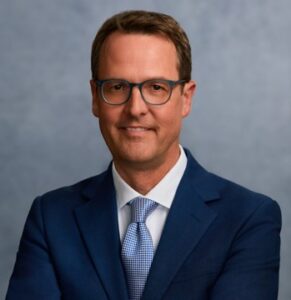
-
Andy Cook is a Partner in the Washington, D.C. and Seattle, WA offices of Orrick. As former Chief Deputy Attorney General for the State of Wisconsin, Andy has extensive experience representing businesses before state Attorneys General involving investigations and lawsuits. His strong relationships with Attorneys General and their senior staff frequently facilitate the successful resolution of client issues through diplomacy and negotiations. When litigation becomes necessary, Andy effectively advocates for clients throughout the litigation process.
- Learn More

-
Rob McKenna is a Partner in the Seattle, WA and Washington, D.C. offices of Orrick. He leads the state Attorney General team in the firm’s State and Federal Government Solutions group and is a member of the Cyber, Privacy & Data Innovation practices. Prior to joining the firm, Rob served two terms as Attorney General of Washington, from 2005 to 2013. He served as President of the National Association of Attorneys General from 2011–12 where he co-launched the NAAG Intellectual Property Task Force. He is a member of WLF’s Legal Policy Advisory Board.
- Learn More

-
The Honorable Kris Kobach was elected as Kansas’s 45th Attorney General in November 2022. Prior to that, he served as the 31st Kansas Secretary of State, 2011-2019. Shortly after serving as a law clerk on the U.S. Court of Appeals for the Tenth Circuit, Attorney General Kobach became a professor of constitutional law at the University of Missouri – Kansas City School of Law, 1996-2011. He also served in the United States Department of Justice under Attorney General John Ashcroft as Counsel to the Attorney General.
- Learn More