Staged, Filed and Profitable: The Enterprise Behind Litigation Fraud
By:
What if the fraud isn’t happening on the street, but in the courtroom?
That is the core allegation in an explosive federal lawsuit filed on October 7 by Accredited Surety and Casualty. The suit targets New York attorney Herbert Subin and financier Neal Magnus over a sprawling referral scheme designed to inflate settlement payouts with unnecessary medical procedures.
Sworn statements from inside the network lay out the modus operandi. According to the non-physician manager of All Boro Medical Rehabilitation, Magnus recruited him specifically to run the clinic, backed by a direct guarantee from Subin: “the entirety of the referral stream” would flow straight through his doors.
These allegations fit a troubling national pattern. A landmark report from the American Tort Reform Foundation, Turning the Tables?, reveals that corporations and carriers across multiple sectors have filed more than 300 RICO complaints to dismantle fraudulent litigation schemes.
Same Players. New Lawsuits. Same Fraud Patterns.
For Subin’s firm, the allegations aren’t new. Since 2024, federal dockets reveal a pattern involving the firm: reinsurer Roosevelt Road Re alleged staged construction accidents, while Union Mutual cited a runner network targeting vulnerable immigrants.
Greater New York Mutual filed suit this year over alleged staged accidents and medically unnecessary procedures meant to inflate claim values — echoing a 2024 ABC-7 investigation that traced 30 personal injury actions to a single Bronx apartment.
While Accredited Surety’s October filling is not a RICO case, the case highlights a growing “fraudemic” taking over civil dockets.
Fighting Back with Federal RICO
Accredited Surety isn’t alone in fighting deceptive practices. When household names like Uber, FedEx, 3M, Ford, and J-M Manufacturing invoke federal anti-racketeering statutes, it signals a structural failure in traditional court safeguards.
Civil RICO is no easy path. Plaintiffs must prove direct injury, a distinct enterprise, and a pattern of mail or wire fraud pleaded with particularity. Companies incur that massive burden only when ordinary guardrails fail to stop bad-actor networks from exploiting procedural gaps “on an industrial scale,” often in Judicial Hellholes®.
ATRF’s data shows how far it has gone:
- 25 federal RICO actions filed against attorneys, law firms or litigation funders between January 2024 and July 2026.
- 299 auto-fraud claims brought by insurers against clinics, equipment suppliers, and pharmacies since January 2024.
- 232 of those 299 filed in the Eastern District of New York, dubbed “America’s auto insurance fraud court.”
- About 100 filings a year in 2024 and 2025, with 2026 on track to hit 140.
Inside the Trial Lawyer Playbook™
This wave of RICO actions exposes a standardized playbook where coordinated networks transform marginal or non-existent claims into massive settlement demands. Common tactics include runners and staged trip-and-falls, predetermined overtreatment, bulk referrals and paid doctors, funder-driven medical buildup, and mass-produced claims.
The examples are striking. In Wesco Insurance Co. v. Liakas Law, the insurer alleges many claimants lived on Long Island but claimed falls in the Bronx, Brooklyn and Queens. 3M claims more than 850 “cookie-cutter” black lung claims, and J-M Manufacturing revealed a 96.3% dismissal rate across about 434 asbestos actions.
Fueling this entire pipeline is third-party litigation financing. In New York Marine v. Case Cash Funding, litigation financiers were accused of directly funding referral loops and forcing unnecessary surgeries — a blueprint that directly mirrors the Subin allegations.
The Hurdle: Divided Dockets
Even with an exposed playbook and identified patterns across the nation, federal courts remain sharply split on whether corporate victims can use RICO as a defensive shield.
On one side of the divide, key courts are opening the door to corporate plaintiffs. The Eastern District of Pennsylvania became the first major venue to let the Uber Technologies & FedEx v. Simon & Simon RICO case move forward. This month, Judge Kearney tossed the defendants’ counterclaims, denied their motion for partial summary judgment, and set the stage for a 2027 trial. In California, the case Uber v. Downtown LA Law Group largely survived dismissal in August 2026.
Elsewhere, corporate plaintiffs have run into distinct legal roadblocks:
- Direct-injury standing: As Roosevelt Road Re showed, the injury must land directly on the plaintiff.
- Noerr-Pennington immunity: This doctrine shields litigation as protected petitioning.
- RICO’s enterprise requirement: In J-M Manufacturing v. Simmons Hanly Conroy, the court found no enterprise separate from the firm itself.
Win or lose, the bottom line is clear: businesses shouldn’t be left with no choice but to invoke federal mob-busting statutes just to force a court to examine basic physical facts. When litigation abuse reaches this scale, it is clear that the legal system’s built-in safeguards are broken.
Turning the Tables Back: What Can Be Done
Reclaiming civil justice requires a comprehensive overhaul — starting inside the courtroom and extending to statehouses and prosecutors’ offices.
Judges should police their own dockets. That means allowing discovery into suspicious treatment pipelines, permitting amended complaints when fraud surfaces late and scrutinizing repeated voluntary dismissals that dodge oversight.
When abuse is exposed, courts must enforce, amend, and strengthen Rule 11 by closing 21-day safe-harbor loopholes, awarding defense costs, and referring bad actors to law enforcement. As Queens County Supreme Court Justice Salvatore J. Modica put it: “A judicial shrugging of the shoulders in the face of criminality — if proven — is just unacceptable.”
Other key reforms include:
- Closely and fairly consider civil RICO and fraud actions: Courts should refrain from dismissing well-pleaded fraud actions before discovery simply because the underlying acts occurred during litigation. As I’ve previously emphasized: “Judges should let well-pleaded RICO cases proceed rather than dismiss them because they arise from litigation.”
- Mass tort litigation reforms: Early screening of claims, such as Lone Pine orders and requiring proof of exposure and injury.
- Legislative interventions: Third-party litigation financing disclosure, referral and letter-of-protection transparency, and New York Scaffold Law and no-fault reform.
- Criminal enforcement: Federal prosecutors and district attorneys must commit dedicated units to investigate and prosecute organized litigation fraud rings.
The Final Verdict
When courts cannot or will not police fraudulent claims, the financial burden falls squarely on businesses, insurers, and ultimately everyday consumers through higher prices and premiums, while honest claimants lose credibility in a cluttered system.
Businesses are turning the tables because they have no other choice. They shouldn’t have to. The best answer to a fraudulent referral stream is a court system willing to ask where the stream begins.
Read the full data, case studies and tracker, and policy solutions in ATRF’s report,Turning the Tables?, at StopCourtFraud.com, and follow ongoing state coverage in ATRF’s Judicial Hellholes® report.
Author
-
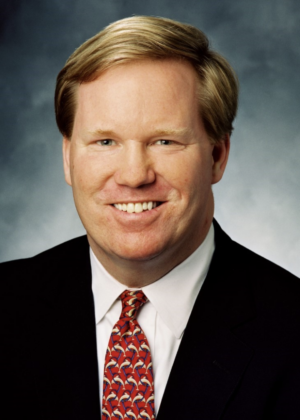
Sherman “Tiger” Joyce is President of the American Tort Reform Association, the nation’s first organization exclusively dedicated to reforming the civil justice system. Founded in 1986, ATRA is a nationwide network of state-based liability reform coalitions backed by 142,000 grassroots supporters. Mr. Joyce served as Legislative Assistant to U.S. Senator John C. Danforth until 1984 and after being admitted to the Virginia Bar, he became minority counsel to the Senate Committee on Commerce, Science, and Transportation, where he worked on product liability legislation. Mr. Joyce assumed his current position in August 1994.
- Learn More