Judicial Science Manual Under Fire: The FJC–NASEM Controversy That Won’t Go Away
By:
The Federal Judicial Center (FJC)—the federal judiciary’s research and education agency—and National Academies of Science, Engineering and Medicine (NASEM) have drawn substantial criticism following revelations that scientists directly tied to the plaintiffs’ bar drafted parts of the latest Reference Manual on Scientific Evidence.[1] The Manual, now in its fourth edition, has been a mainstay of judicial education for more than thirty years. Judges rely on it to provide neutral scientific principles to help them sift through expert evidence in their courtrooms. The fact that parts of the latest edition were co-opted by litigation partisans—on either side of the “v.”—has sounded alarm bells across the legal community.
The part of the Manual that initially caught people’s eye was the new Reference Guide on Climate Science, which focused on theories at the heart of speculative lawsuits against energy companies seeking climate-related damages. Specifically, it gave credence to “attribution” theories lawyers and think tanks behind this litigation have been developing that seek to tie specific weather events, such as hurricanes and heat waves, to legal responsibility. It turns out that this chapter was written by individuals associated with the plaintiffs’ law firm that has brought more than two dozen climate lawsuits around the country, along with the Sabin Center at Columbia University, a think tank that has long supported the litigation.
Twenty-seven state attorneys general (AGs) immediately called on the FJC and NASEM to withdraw the climate science guide and provide transparency on how it was added to the Manual, explaining it “undermines the judiciary’s impartiality and places a thumb on one side of the scale.”[2] Members of Congress, stakeholders in the civil justice system, and newspapers such as the Wall Street Journal joined this effort. FJC’s Director, Judge Robin Rosenberg, quickly responded by informing the AGs that the climate science guide had been “omitted” from the Manual and removed from the FJC’s website.[3] This news was welcome, but its effect is in doubt because NASEM refused to follow suit. NASEM’s President wrote the Wall Street Journal saying NASEM would not disavow that chapter. It remains in the version of the Manual on NASEM’s website, and it is not being recalled from copies already sent to judges.[4]
The Importance of the Manual’s Neutrality
Congress established the FJC in 1967 to improve administration of the federal judiciary through research and education. It first produced the Manual in 1994, after the Supreme Court in Daubert v. Merrell Dow Pharmaceuticals instructed judges to be gatekeepers of science and screen out unreliable evidence. The Manual’s value is explaining science judges see regularly—such as statistics, DNA evidence, epidemiology, and toxicology—in lay terms.
The Manual’s purpose was limited: to give judges resources for “understanding relevant scientific methods and principles that may arise in their cases.”[5] The FJC has historically stressed that the Manual solely “describes basic principles of major scientific fields” as a tool for sifting through science presented by the parties; it is “not intended to instruct judges concerning what evidence should be admissible.”[6] The Manual, now developed with NASEM, is provided to thousands of federal and state judges and cited in over 1,700 opinions.[7] It is “the go-to guide” helping judges sort out scientific testimony.[8]
The Manual’s New Partisan & Outcome Bias
As the state AGs pointed out, having litigation partisans author any chapter of the Manual undermines its credibility. One of the authors of the climate chapter, Jessica Wentz, works for the Sabin Center for Climate Change Law, and the other, Radley Horton, collaborates with the Center on climate “attribution” theories. The chapter acknowledges contributions by Michael Burger, who works at the Center and is of counsel at the law firm bringing these cases. The authors lifted extensively from an “attribution science” article they co-authored with Mr. Burger.[9] And, in a letter to Congress seeking an investigation into this episode, the state AGs expressed additional concern with the involvement of the Environmental Law Institute’s Climate Judiciary Project.[10]
Thus, rather than being a tool for helping judges determine whether science is sufficiently reliable for admissibility purposes, this chapter, the state AGs explained, is “advocacy-based.” It seeks to have judges “accept” their views, including that “novel” climate attribution methods are “not ‘novel’ at all” by suggesting this field is settled science. The AGs also provided specific examples of “methodology issues,” including where assertions are “predetermin[ed]” and ignore criticisms. Others have noted the private Foundation that funded the Manual also gives money to a group that funds climate litigation.[11]
The rest of the Manual is also under scrutiny, as these problems have affected the other guides—including the “How Science Works” chapter.[12] One study showed several chapters where the Manual fails to identify issues with replicability of studies and bias in research.[13] Others found plaintiff-lawyer advocates cited elsewhere in the Manual[14] and observed that, unlike in the past, the Manual regularly asserts there is “consensus” over substantive scientific conclusions, presumablyto drive judicial findings rather than adhere to the Manual’s historic role of providing tools for assessing scientific assertions.[15]
Where Do Judges Go from Here?
The FJC’s decisive removal of the climate science guide validates the fact that the chapter undercut the Manual’s credibility. NASEM’s decision to keep it seems grounded in a reflexive self-defense of the organization from efforts to seek accountability. The Manual, though, is not about NASEM; it is about judges, scientific integrity, and neutrality. So, when judges receive the Manual, download it from the FJC or NASEM, or see it cited in cases, they should know this year’s Manual unfortunately is tainted due to the influence of advocates. It must be read, if at all, with eyes wide open.
[1] See Ed. Bd., A Climate Manual Bait and Switch, Wall St. J., Mar. 2, 2026; N. Raymond, US Judiciary Scraps Climate Chapter from Scientific Evidence Manual, Reuters, Feb. 9, 2026.
[2] Letter of 27 State Attorneys General to Judge Robin L. Rosenberg, Director of the Federal Judicial Center, Jan. 29, 2026.
[3] Letter of Judge Robin L. Rosenberg, Director of the Federal Judicial Center, to The Honorable John B. McCuckey, West Virginia Attorney General, Feb. 6, 2026.
[4] See M. McNutt, The National Academy of Sciences Isn’t Biased, Wall St. J., Mar. 7, 2026.
[5] Fed. Jud. Ctr., Reference Manual on Scientific Evidence ii (4th ed. 2025).
[6] Fed. Jud. Ctr., Reference Manual on Scientific Evidence xv (3rd ed. 2011).
[7] See M. Green, The Education of the Judiciary: The Sciences Addressing Disease Causation, 49 Sw. L. Rev. 492, 499 (2021).
[8] J. Beck, Introducing the New Reference Manual for Scientific Evidence, Drug & Device Blog, Jan. 12, 2026.
[9] See M. Burger, et al., The Law and Science of Climate Change Attribution, 45 Columbia J. of Envt’l L. 1 (2020).
[10] State Attorneys General Letter to U.S. House Judiciary Committee, Feb. 2, 2026.
[11] See K. Kohli, The FJC Manual Scandal Keeps Getting Worse, Energy In-Depth, Mar. 18, 2026.
[12] R. Pielke, Jr., More Problems With the FJC Science Manual for Federal Judges, The Honest Broker, Apr. 9, 2026.
[13] W. Kindzierski & S. Young, When Courts Rely on Unreliable Science: A Review of the Federal Judicial Center Reference Manual for Scientific Evidence 4th Edition, 2025, Nat’l Ass’n of Scholars, Apr. 2026.
[14] J. Beck, Update on the New 4th Edition of the Reference Manual on Scientific Evidence, Drug & Device Blog, Feb. 16, 2026.
[15] J. Weinkle, Origins of the Reference Manual on Scientific Evidence, Conflicted, Feb. 19, 2026.
Authors
-
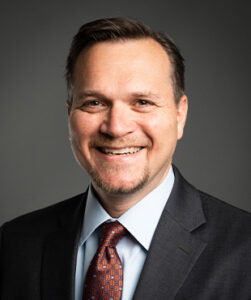
Phil Goldberg is the Managing Partner of Shook, Hardy & Bacon L.L.P.’s Washington, DC office and co-chair of the firm’s Public Policy Practice Group. With more than 25 years of experience, he advises businesses and trade associations on high-stakes liability-related public policy matters, co-chairs the firm’s National Amicus Practice – filing more than three dozen amicus briefs annually at courts ranging from state appellate courts to the U.S. Supreme Court – and is a leading voice on civil justice reform across areas including public nuisance, pharmaceutical liability, climate change litigation, and tort law development.
- Learn More
-
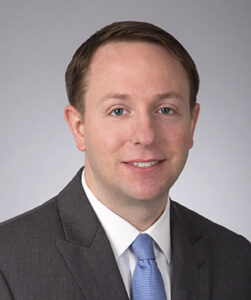
Chris is Senior Counsel in Shook, Hardy & Bacon L.L.P.’s Public Policy Group. His public policy practice centers on tort law and civil justice system reform. His work spans legislative advocacy, appellate litigation and liability counseling. He is an elected member of the American Law Institute and has authored more than 80 legal publications on a wide range of liability issues.
- Learn More